Sleep Is Not Laziness. It Is Life.
- May 15
- 6 min read
Updated: May 16
Somewhere along the way, many of us learned to wear exhaustion like a badge of honor.
We glorify being busy.
We applaud running on fumes.
We quietly admire the person who sleeps four hours and still “gets everything done.”
But science keeps telling us something very different.
Sleep is not laziness.
Sleep is not weakness.
Sleep is not optional.
Sleep is one of the most powerful forms of healthcare we have.
Just as brushing our teeth protects our mouths, sleep protects our brains, our hormones, our immune systems, our emotional health, our metabolism, our memories, and perhaps even our future selves.
The research surrounding sleep and long-term brain health has become impossible to ignore. Poor sleep is associated with increased risks of cognitive decline, insulin resistance, obesity, depression, cardiovascular disease, inflammation, and neurodegenerative diseases, including Alzheimer’s disease.
And yet, many people still treat sleep as something they’ll “catch up on later.”
Perhaps we should begin viewing healthy sleep the same way we view:
drinking water
nourishing our bodies
moving daily
bathing
learning
loving others
caring for our emotional well-being
Not as luxuries.
As maintenance for a beautiful life.
Most adults truly need somewhere around 7–9 hours of quality sleep consistently to function optimally over the long term. Some need slightly more. Some slightly less. But very few humans genuinely thrive on chronic sleep deprivation.
Your brain cleans itself during sleep.
Your memories organize during sleep.
Your hormones rebalance during sleep.
Your nervous system calms during sleep.
You do not become healthier by overriding biology.
You become healthier by respecting it.
And honestly?
A well-rested person is often kinder, calmer, more patient, more emotionally resilient, and more capable of fully enjoying life.
That matters too.
Health Is Not About Perfection
One of the biggest mistakes modern wellness culture has made is turning health into punishment.
People become afraid of bread.
Afraid of bananas.
Afraid of dessert.
Afraid of rest.
Afraid of missing one workout.
But true long-term health usually comes from consistency, not obsession.
Science continues to support the same foundational principles again and again:
quality sleep
regular movement
healthy relationships
blood sugar stability
stress management
strength training
walking
social connection
learning new things
nutrient-dense foods
avoiding smoking
limiting ultra-processed foods
moderation rather than extremes
Not perfection.
Just thoughtful living practiced repeatedly over time.
Carbohydrates Are Not the Enemy
Carbs are one of the most misunderstood parts of nutrition.
Many people have been taught to fear them entirely. But carbohydrates are not inherently bad. In fact, many of the healthiest foods on earth contain carbohydrates:
fruit
beans
lentils
oats
sweet potatoes
quinoa
vegetables
whole grains
The issue is often not carbohydrates themselves.
The issue is:
portion size
highly processed foods
liquid sugars
lack of fiber
eating carbs alone without protein or healthy fat
chronic overeating
inactivity
individual metabolic health
For many people, especially those with insulin resistance or diabetes, balancing carbohydrates with protein, fiber, and healthy fats can dramatically improve energy, fullness, and blood sugar stability.
A Better Way to Think About Meals
Instead of obsessing over calories, perhaps think about balance.
A balanced meal often includes:
Protein
Protein helps maintain muscle, supports metabolism, stabilizes blood sugar, and helps keep us full.
Examples:
fish
eggs
Greek yogurt
tofu
lentils
cottage cheese
edamame
beans
Fiber
Fiber supports gut health, fullness, cholesterol management, and healthier glucose responses.
Examples:
vegetables
berries
chia seeds
beans
oats
lentils
flax
apples
leafy greens
Healthy Fats
Healthy fats support hormones, satiety, brain health, and flavor.
Examples:
olive oil
avocado
nuts
seeds
nut butters
olives
feta cheese
Parmesan cheese
Kalamata olives
Thoughtful Carbohydrates
Carbs provide energy and nourishment when chosen wisely and balanced appropriately.
Examples:
fruit
quinoa
oats
beans
sweet potatoes
brown rice
whole grain bread
pasta in reasonable portions
Why Pairing Foods Matters
One of the simplest nutrition lessons many people never learn is this:
A carbohydrate eaten alone often behaves differently than a carbohydrate eaten with protein, fiber, or fat.
For example:
Instead of:
a banana alone
Try:
banana with peanut butter
banana in Greek yogurt
banana in a protein smoothie
Instead of:
crackers alone
Try:
crackers with hummus
crackers with tuna salad
crackers with cheese
Instead of:
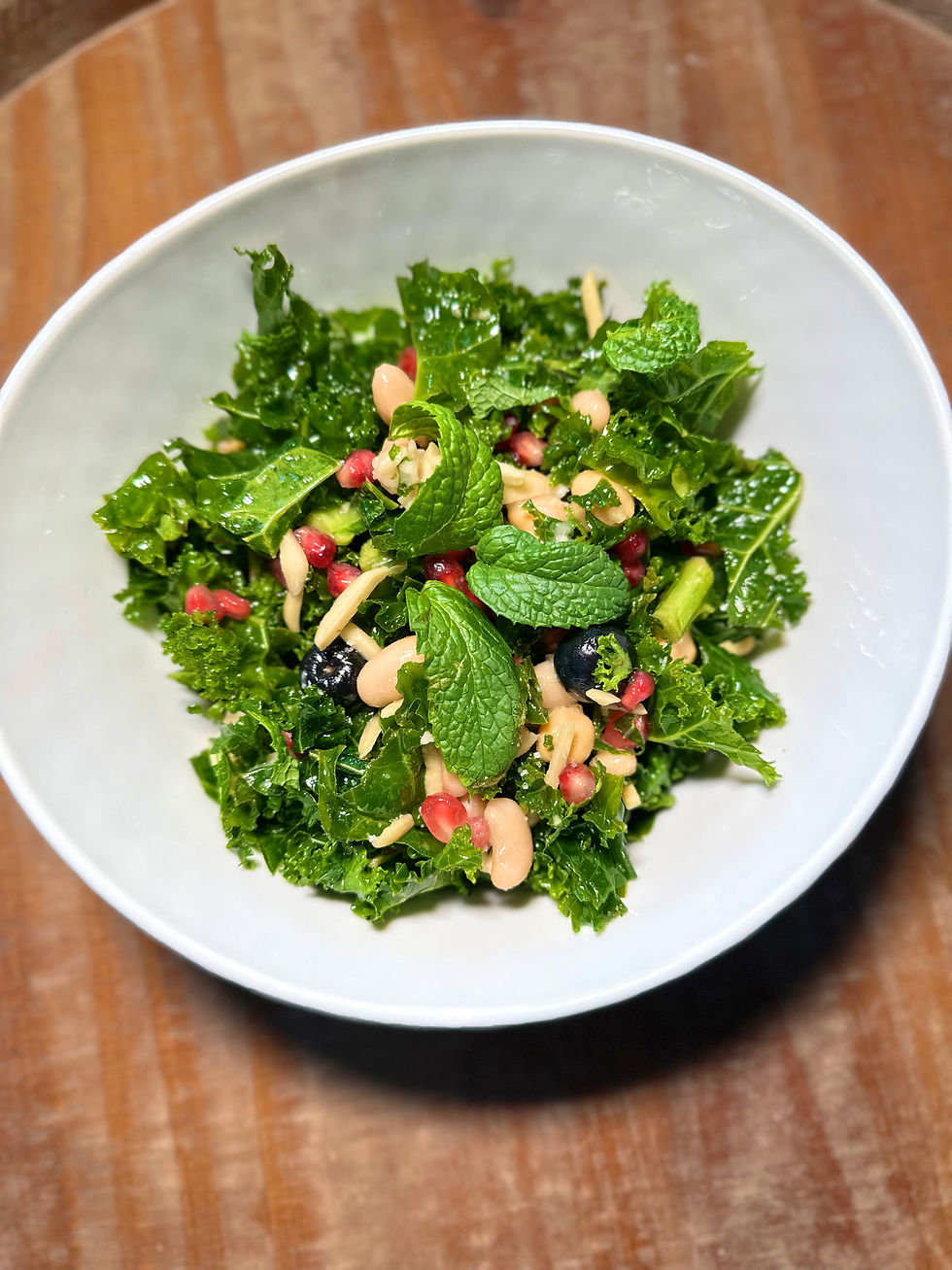
a plain salad with lettuce and vegetables only
Add:
salmon
tuna
chickpeas
avocado
boiled eggs
nuts
grilled fish
feta
Parmesan
That combination often leads to:
better fullness
steadier energy
less overeating later
more stable glucose levels
Healthy Eating Should Still Feel Joyful
A healthy lifestyle should still include pleasure.
Fresh bread in Paris.
Birthday cake with family.
A croissant on vacation.
Dark chocolate after dinner.
A beautiful meal shared with someone you love.
Health is not about removing joy from life.
It is about creating a life where joy and wellness can coexist.
Even dark chocolate — often discussed as a “superfood” — is a lovely example of moderation and balance. Dark chocolate contains antioxidants and flavanols that may support cardiovascular and brain health. But it also contains small amounts of caffeine and theobromine, which may affect sleep in some people.
That does not mean dark chocolate is “bad.”
It simply means we learn our bodies.
Some people tolerate a square of dark chocolate at 8 p.m. beautifully.
Others sleep better if they enjoy it earlier in the evening.
Health is not about rigid rules.
It is about awareness.
A Simple Carb Guide
For those trying to better understand carbohydrates without becoming obsessive, rough estimates can be helpful.
My endocrinologist, Dr. Sherif Yacoub, recently shared this easy-to-follow carb-counting guide with me:
Approximate Carb Examples
1 cup dessert (cake, pie, pastry): ~60g carbs
1 cup white starch (pasta, rice, noodles): ~45g carbs
1 cup beans, oatmeal, potatoes, fruit: ~30g carbs
1 roll, slice of toast, cookie, or small fruit serving: ~15g carbs
1 cup green vegetables or salad: ~7.5g carbs
Protein and fats contain no to minimal carbohydrates:
fish
meat
eggs
oils
butter
mayonnaise
But individual carbohydrate needs vary tremendously based on:
activity level
muscle mass
age
metabolic health
diabetes status
goals
medications
overall lifestyle
The goal is not fear.
The goal is understanding.
Some Simple Healthy Meal Ideas
Breakfast
Greek yogurt with berries, chia seeds, pecans, and cinnamon
Eggs with avocado toast (tip: mix your avocado with cottage cheese to boost the protein, drizzle on some olive oil, honey, and a squeeze of lemon, and then add a pinch of coarse sea salt for a delicious, easy avocado toast, and try a nice rosemary sourdough bread as the base)
Protein smoothie with spinach, berries, almond butter, and protein powder
Oatmeal with nuts and protein added
Lunch
Salmon salad with avocado, feta, tomatoes, and homemade olive oil vinaigrette
Lentil soup with roasted vegetables
Grain bowl with quinoa, edamame, roasted vegetables, and tahini
Dinner
Grilled fish with asparagus and sweet potato
Stir-fried vegetables with tofu and brown rice
Shrimp with roasted vegetables and quinoa
Healthy Snacks
Apple with peanut butter or nuts
Greek yogurt with berries and nuts
Cottage cheese and fruit or vegetables
Chia pudding
Edamame
Hummus with carrots
Handful of almonds
Tuna salad on a thin rice cake
One square of dark chocolate with nuts
Move Your Body. But Also Move Your Mind.
Exercise is not punishment for eating.
Movement is one of the greatest gifts we can give our future selves.
Walks.
Strength training.
Yoga.
Swimming.
Dancing in the kitchen.
Cycling.
Stretching.
Gardening.
Sex.
All of it matters.
And mental activity matters too.
Read books.
Learn languages.
Travel.
Have conversations.
Stay curious.
Laugh often.
Challenge your brain.
A healthy life is not merely about extending years.
It is about preserving vitality within those years.
Perhaps the Most Important Lesson
Your body is not your enemy.
Your brain is not meant to be run into exhaustion.
Food is not meant to create fear.
Sleep is not laziness.
A healthy life is not punishment.
Perhaps the goal is not perfection at all.
Perhaps the goal is learning to care for ourselves with enough wisdom, consistency, movement, nourishment, love, rest, curiosity, and joy that we remain fully alive — mentally, emotionally, physically, and spiritually — for as much of this beautiful life as possible.
And perhaps that is one of the healthiest things we can teach the next generation, too.
Honey Note:
Your future brain is quietly listening to how you care for yourself today. The walks. The sleep. The vegetables. The friendships. The strength training. The laughter. The boundaries. The protein you added to the salad, instead of pretending lettuce alone was a meal. It all matters more than you think.
Honey, who believes a healthy life should still feel delicious...